
Sami culture in Norway is a living Indigenous culture rooted in Sápmi, the traditional homeland stretching across Norway, Sweden, Finland, and Russia. It carries distinct languages, regional livelihoods from reindeer herding to coastal farming, and a modern revival that followed decades of state suppression. Norway now recognizes the Sami as its Indigenous people through the Sámediggi (Sami Parliament), and recent NIBIO research confirms that even farming practices in the far north carry cultural weight most visitors never see.
TL;DR:
- Norwegianization policies suppressed Sami language and land rights from the 19th to the mid-20th century, with legal reforms only beginning in the late 20th century.
- About three Sami languages are spoken in Norway today, with Northern Sami being the most widespread and supported through public services, education, and media.
- Reindeer herding remains a central livelihood organized within the siida system, but coastal Sami communities in Finnmark and Troms have historically combined fishing and farming, which continue to sustain cultural identity.
- Authentic Sami experiences are best found through Sami-owned businesses, community-led centers, and guides with deep regional roots, rather than generic tourist attractions or impersonations.
- Sami farming, especially in coastal areas, plays a crucial role in language preservation and community cohesion, making land access and support for Sami agriculture vital for cultural survival.
Table of Contents
- What Is Sami Culture, and Where Does It Exist in Norway?
- How Did Norwegianization Shape Sami History?
- What Sami Languages Are Spoken in Norway Today?
- How Do Reindeer Herding, Fishing, and Farming Shape Sami Life?
- What Are the Key Sami Traditions in Norway?
- How Does Sami Political Representation Work in Norway?
- How Can You Experience Sami Culture in Norway Respectfully?
- What Does Sami Agriculture Reveal About Cultural Survival?
- Why Local Guides Change How You Understand Sami Culture
- See Sami Culture and the Arctic Landscape Firsthand
- Sources
What Is Sami Culture, and Where Does It Exist in Norway?
Sápmi has no fixed border on any national map, but it covers roughly the northern third of Norway along with northern Sweden, Finland, and Russia's Kola Peninsula. Norway holds the largest share of the Sami population of any of the four countries, concentrated heavily in Finnmark and Troms, with Karasjok and Kautokeino functioning as cultural and political hubs.
Drive through these towns and you will notice bilingual road signs, Sami flags flying beside Norwegian ones, and municipal buildings that operate in both languages. That is not decoration. It reflects a legal designation: several municipalities in Finnmark and Troms fall under Norway's Sami language administrative area, which obligates public services to function in Sami as well as Norwegian.
Identity here works on two levels at once. A person can be ethnically Sami and a Norwegian citizen without contradiction, the same way someone can be Cajun and American, or Basque and Spanish. What determines Sami identity legally in Norway is not blood quantum but a mix of self-identification and family language history, which is why the electoral roll for Sámediggi elections uses specific eligibility criteria rather than ancestry alone.
A few facts orient the picture quickly:
- Sápmi spans four countries; Norway hosts the largest Sami population of the four.
- Finnmark and Troms are the main population centers, with Karasjok and Kautokeino as recognized cultural capitals.
- Sami is not one language but a family of related languages, several of which are spoken in Norway.
- Regional variation is the rule, not the exception. Coastal Sami communities historically fished and farmed; inland communities herded reindeer.
That last point matters more than most travel guides admit. Reindeer herding gets most of the international attention, but treating it as the whole of Sami life flattens a culture that has always been regionally diverse. A fishing family in coastal Finnmark and a herding family in inland Kautokeino share language roots and political institutions, but their daily lives, economies, and even their traditional dress can look quite different.
How Did Norwegianization Shape Sami History?
Sami presence in northern Scandinavia goes back thousands of years, evidenced by sites like the Alta rock carvings, which document human activity in the region long before any Norwegian state existed. Early Sami livelihoods mixed hunting, fishing, trapping, and small-scale herding, with full-scale nomadic reindeer husbandry developing as a distinct economic system later, likely gaining prominence between the 16th and 17th centuries as wild reindeer populations declined and demand for domesticated herds grew.
The 19th and 20th centuries brought a deliberate campaign to erase that distinctiveness. Norwegianization policy pushed Sami children into boarding schools where speaking Sami was punished, land rights were tied to Norwegian language proficiency, and Sami place names were replaced on official maps. The Minority Rights Group documents how these policies suppressed language transmission across generations, a wound that still shows up in language statistics today.
Recovery from that suppression did not happen gradually. It came through confrontation. Here is the sequence that matters most:
- The Alta conflict (late 1970s to early 1980s). Plans to dam the Alta River for hydroelectric power threatened Sami reindeer grazing land and a Sami village, triggering the largest civil disobedience campaign in modern Norwegian history and putting Indigenous rights on the national political agenda for the first time.
- Establishment of Sámediggi (1989). Norway created its Sami Parliament, giving Sami people an elected body with formal, if limited, political standing.
- The Finnmark Act (2005). This law transferred most of Finnmark county's land to a new body, the Finnmark Estate, jointly governed by representatives appointed by Sámediggi and the county council, a direct legal response to unresolved land rights.
- Ongoing apologies and reform. Norwegian institutions, including the Church of Norway and the monarchy, have issued formal apologies for Norwegianization, and truth and reconciliation efforts continue to examine the policy's long-term damage, as detailed in the history of the Sámi.
None of this fixed everything. Land disputes still reach Norwegian courts, and Sami advocates argue the Finnmark Act's co-management model still gives the county council disproportionate influence relative to Sami population share in the region. But compare today's legal landscape to the 1970s, when Sami language use was actively discouraged in schools, and the shift is unmistakable.
What Sami Languages Are Spoken in Norway Today?
Three Sami languages have meaningful speaker populations within Norway's borders: Northern Sami, Lule Sami, and Southern Sami. They are not dialects of one language but distinct, mutually unintelligible languages within the broader Sami language family, roughly comparable to the difference between Norwegian and Icelandic.
Northern Sami dominates by far, spoken across Finnmark and northern Troms and functioning as the de facto standard in Sami media and education. Lule Sami has a smaller speaker base centered around Tysfjord and neighboring areas further south. Southern Sami, spoken from Trøndelag down toward the Norway-Sweden border region, has the fewest speakers of the three and faces the steepest revitalization challenge.
Norway's response has moved past symbolic gestures into structural support:
- Municipalities within the designated Sami language administrative area must provide public services in Sami on request.
- NRK, Norway's public broadcaster, runs Sami-language news and children's programming, which matters enormously for a language family with a small speaker base and limited commercial media incentive.
- Sami-medium schools and kindergartens operate in Sami-majority areas, aiming to rebuild the generational transmission that Norwegianization deliberately severed.
- Sámi University of Applied Sciences in Kautokeino trains teachers and researchers in Sami languages and culture, feeding new speakers back into the school system.
Language loss does not reverse on its own. The generation forced through Norwegianization-era boarding schools often did not pass Sami on to their children, creating a documented gap in fluent speakers among people now in their fifties and sixties. Revitalization programs work by targeting that gap directly, through immersion schools and adult language courses aimed at people reclaiming a language their grandparents spoke fluently and their parents may not speak at all.
How Do Reindeer Herding, Fishing, and Farming Shape Sami Life?
Reindeer husbandry is the most visible Sami livelihood, but it is far from the only one, and even herding itself operates through a specific social structure most outsiders never hear about. Herding families organize into a siida, a collective unit that manages grazing rights, herd movements, and resource decisions as a group rather than individually. Roughly 3,000 people practice Sami reindeer husbandry in Norway, managing herds that collectively number in the hundreds of thousands, and Norwegian law protects reindeer grazing rights specifically because of this collective siida structure, not individual land ownership.
Coastal Sami communities followed an entirely different economic path. Along the Finnmark and Troms coastline, Sami families combined small-scale fishing with subsistence farming for generations, a semi-nomadic pattern that shifted seasonally between fishing grounds and pasture rather than following reindeer migration routes. This is the branch of Sami culture that gets the least tourism attention despite being just as historically rooted.
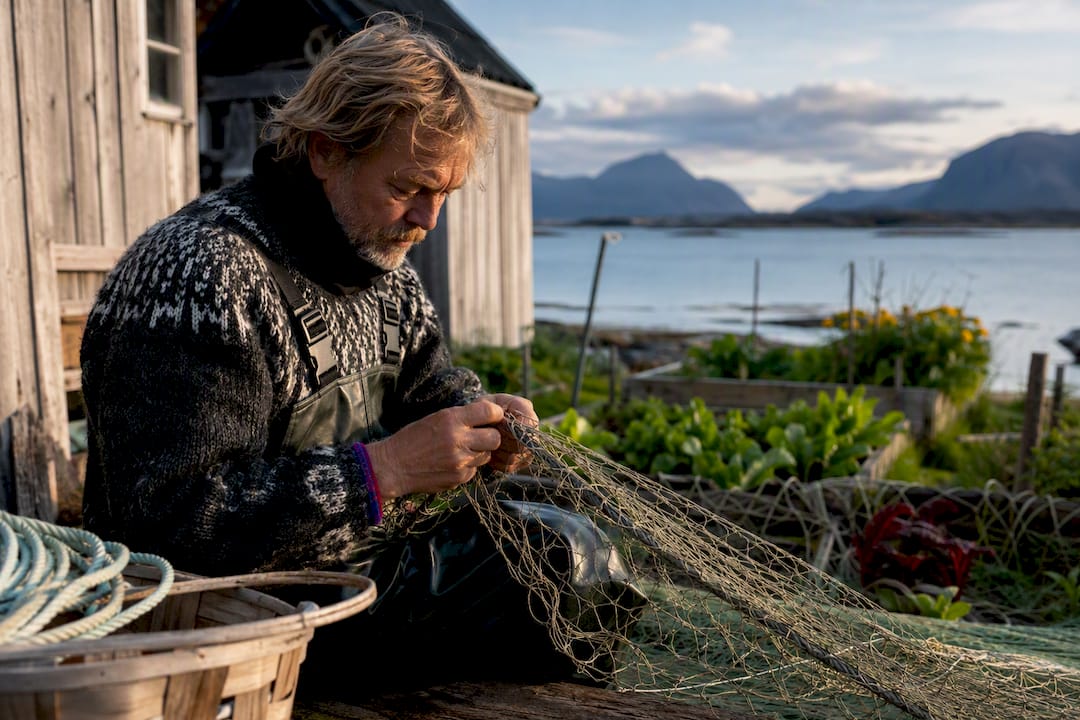
Recent NIBIO research adds a layer most cultural overviews miss entirely: Sami agriculture in coastal areas dates back to the 14th century and functions as more than food production. It carries language, tradition, and community cohesion in ways that pure herding narratives overlook. NIBIO's researchers point to concepts like verddevuohta, a term describing mutual obligation and cooperative relationships between neighboring farms, as evidence that agricultural vocabulary itself preserves cultural knowledge that would otherwise fade.
Modern Sami livelihoods have adapted without abandoning their structure. Herders now use snowmobiles and GPS tracking to manage herds across vast terrain, tools that would have been unimaginable a century ago but that serve the same siida-based decision making. Climate change complicates this adaptation, though: unpredictable freeze-thaw cycles make lichen, the reindeer's winter food source, harder to reach under ice layers, and expanding wind farm and mining development compete directly with traditional grazing land.
Pro Tip: If you want to understand Sami culture beyond the postcard image of reindeer herds, ask a local guide about coastal Sami farming history. It is the half of the story most visitors never hear, and it explains why Sami identity in Norway looks so different from one region to the next.
What Are the Key Sami Traditions in Norway?
Sami cultural expression runs through four forms that show up constantly once you know to look for them: joik, duodji, gákti, and a calendar of festivals built around food and community gathering.
Joik is a traditional vocal style, often performed without instruments, that functions less like a song with lyrics and more like a personal or place-based signature. A joik can be composed for a person, an animal, a mountain, or a memory, and traditionally it does not describe its subject so much as become it. Suppressed for decades under Norwegianization policy, joik has seen a strong modern revival, with contemporary Sami artists blending it into pop, rock, and electronic music and bringing it to international audiences far beyond Sápmi.
Duodji refers to Sami handicraft, but that word undersells it. Duodji objects are functional first: knives, sleds, clothing, containers made from reindeer antler, wood, silver, and leather. The craftsmanship carries generational technique, and contemporary duodji artisans sell everything from traditional silver jewelry to modern interpretations of traditional forms, giving the craft an economic life outside tourism souvenirs.
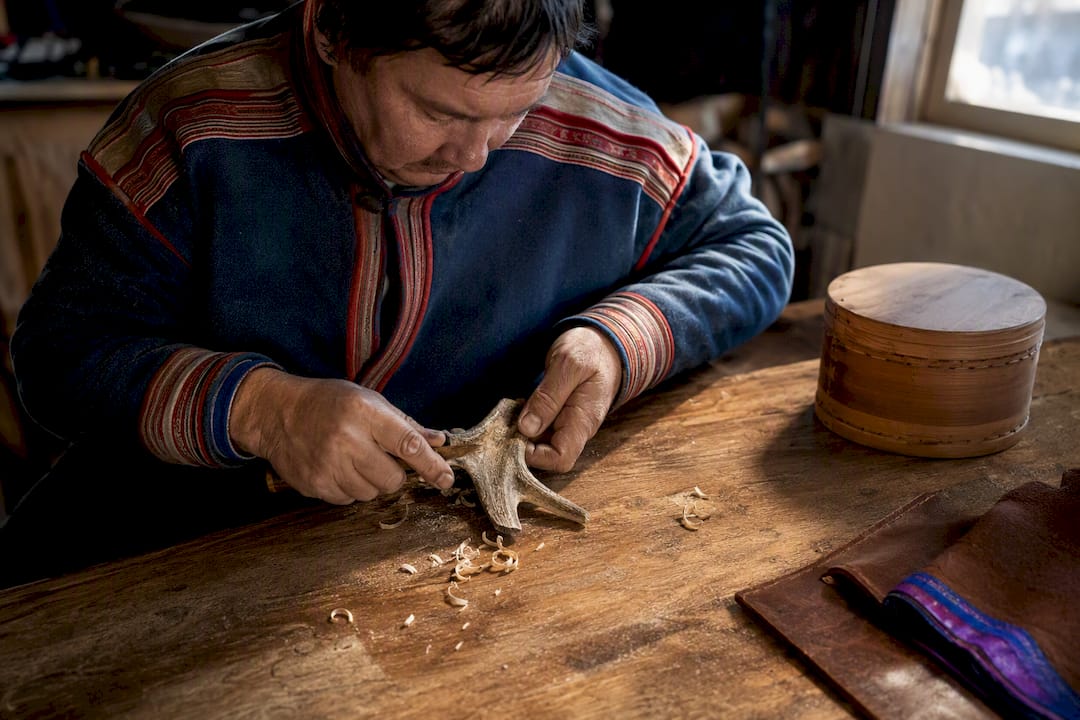
Gákti, the traditional Sami dress, varies significantly by region, and that variation is the point. A gákti from Kautokeino looks different from one worn in coastal Finnmark or in the southern Sami areas near Trøndelag, and those differences historically told other Sami people exactly where the wearer was from. Colors, patterns, and silver ornamentation carry specific meaning, including in some traditions signaling marital status. Gákti is not costume. Wearing one outside its cultural context, or treating it as a photo prop, is one of the fastest ways to cause real offense.
Festivals bring all of this together. Here is what to know about the main ones:
- Sami National Day (February 6) marks the anniversary of the first Sami congress in 1917 and is observed with flag raising, joik performances, and public events across Sami communities in Norway, Sweden, Finland, and Russia.
- Riddu Riđđu, held each summer in Kåfjord, Troms, is an Indigenous music and culture festival that draws Sami and other Indigenous performers from around the world, not just Norway.
- Winter markets, particularly the Jokkmokk and Kautokeino winter gatherings, combine reindeer racing, duodji trading, and joik contests, and mark some of the oldest continuous Sami gathering traditions still practiced today.
Sami cuisine deserves its own mention here, since food shows up at nearly every one of these gatherings. Bidos, a reindeer meat stew, is the closest thing to a Sami national dish, typically simmered with root vegetables. Suovas, smoked and salted reindeer meat, reflects the preservation techniques that made long winters survivable long before refrigeration existed, and it still appears on menus across Finnmark today, according to Visit Norway.
How Does Sami Political Representation Work in Norway?
Sámediggi functions as Norway's Sami Parliament, but its power is consultative rather than legislative. It cannot pass binding national law. What it does is negotiate directly with the Norwegian government on issues affecting Sami interests, from language policy to land management, and it holds formal consultation rights that the Norwegian state is obligated to honor before certain decisions affecting Sami areas move forward.
Cross-border cooperation extends this structure beyond Norway. The Sami Parliamentary Council coordinates positions among the Sami parliaments of Norway, Sweden, and Finland, recognizing that Sápmi's issues, grazing land, climate impact, resource extraction, do not stop at national borders even when political authority does.
The Finnmark Act put land management on a genuinely different footing. By transferring most of Finnmark county's land to the jointly governed Finnmark Estate, the law created a co-management structure that, in theory, gives Sami interests real weight in decisions about how the region's land gets used.
In practice, three pressures test that structure constantly:
- Wind and mining development. Renewable energy and mineral extraction projects, ironically often framed as environmentally progressive, frequently target land that overlaps with reindeer grazing routes, creating direct conflict between climate policy and Indigenous land rights.
- Climate impacts on grazing. Warmer winters bring more freeze-thaw cycles, locking lichen under ice and forcing herders to spend more time and resources feeding animals artificially.
- Representation gaps. Sami advocates continue to argue that county council representation on the Finnmark Estate board understates the weight Sami interests should carry in a region where Sami population share is significant.
Norway hosts the largest Sami population among the four Sápmi countries, according to the history of the Sámi, which is exactly why decisions made in Oslo and Finnmark carry outsized weight for Sami political life across the entire region, not just within Norway's borders.
How Can You Experience Sami Culture in Norway Respectfully?
The single best filter for any Sami cultural experience is a simple question: who runs it? Sami-led businesses, community-run cultural centers, and individual artisans should be your first stop, not a generic tour that happens to include a reindeer photo opportunity. Visit Norway points visitors toward Sami-operated museums and cultural centers in Karasjok and Kautokeino specifically because ownership and authenticity go hand in hand here.
Photography and dress need particular care. Always ask before photographing someone in gákti, and never put one on as a costume for a photo, no matter how many tourist shops seem to offer it. A gákti signals real identity, sometimes down to marital status and home region. Treating it as a prop is the fastest way to turn a respectful visit into an offensive one.
There is also a meaningful difference between a light cultural encounter and a deeper commitment, and both have their place. Attending a public festival like Riddu Riđđu or a winter market is a legitimate, low-pressure way to witness Sami culture in a public setting built for exactly that purpose. Buying duodji directly from a maker, spending an afternoon at a Sami-run cultural center, or booking a guide who can speak from lived experience rather than a script goes further, and it puts money directly into the communities keeping these traditions alive.
Before booking anything branded "Sami experience," run it through a short checklist:
- Is the business Sami-owned or Sami-staffed, not just Sami-themed?
- Do profits stay within the community rather than flowing to an outside operator?
- Is local knowledge, not a generic script, central to what you are being told?
- Does the experience treat gákti, joik, and duodji as living practices rather than props?
Pro Tip: If a tour promises a "traditional Sami village experience" with no named community or guide attached, treat that as a red flag. Genuine Sami-led experiences are almost always specific about who is hosting you and where.
What Does Sami Agriculture Reveal About Cultural Survival?
Farming rarely comes up in conversations about Sami culture, and that is a real gap in how the story usually gets told. NIBIO's 2026 research traces coastal Sami agriculture back to the 14th century, positioning it as one of the oldest continuous threads in Sami economic life, not a modern add-on to herding culture.
What makes the research notable is not just the timeline. It is the argument that farming vocabulary and practice carry cultural weight independent of the crops or livestock involved.
Sami agriculture functions as an important carrier of language, traditions, and community, with practices and terminology like verddevuohta, describing cooperative obligation between neighboring farms, sustaining social bonds that keep small coastal settlements viable across generations.
That has real implications beyond academic interest. If agricultural vocabulary and cooperative practice help sustain language transmission, then policy aimed purely at reindeer herding rights misses half of what keeps Sami communities intact. Supporting coastal Sami farming, through land access, agricultural subsidy structures, and recognition in municipal planning, becomes a language preservation strategy as much as an economic one.
For readers thinking about cultural preservation more broadly, the lesson generalizes: language does not survive in classrooms alone. It survives in the daily vocabulary of work, whether that work is herding reindeer across tundra or maintaining a cooperative farm relationship with a neighbor three generations deep.
Why Local Guides Change How You Understand Sami Culture
Reading about siida structures or verddevuohta only gets you so far. What actually shifts understanding is standing in Finnmark listening to someone whose family has worked that land for generations explain, in their own words, why a particular hillside matters or why a certain gákti pattern belongs to their community and not the next one over.
That is the gap small-group, locally guided travel is built to close. A guide with real roots in a region brings context no guidebook captures: which festivals are open to respectful visitors and which gatherings are family affairs, which duodji sellers are makers themselves versus resellers, how to ask a question about gákti without causing offense. Some local travel companies build Northern Norway experiences around this principle, pairing small groups with local guides rather than running large-bus itineraries that reduce culture to a photo stop.
Scale matters here more than people expect. A group of four or six can pause, ask questions, and follow a guide's actual knowledge instead of a fixed script timed to the minute. That format also puts less pressure on the communities and landscapes being visited, which matters in a region where reindeer grazing land and quiet coastal villages are not built to absorb mass tourism traffic.
None of this replaces reading the history or understanding the politics. It adds the piece that reading alone cannot: a direct, respectful connection to people still living the culture you came to learn about.
— Crystal Sky Venture
See Sami Culture and the Arctic Landscape Firsthand
Understanding Sami history and tradition is one thing. Standing under the aurora over Sápmi's dark winter sky, or watching a fjord catch the last light with someone who grew up on that coastline, is another. Crystal Sky Venture runs small-group, locally guided experiences across Northern Norway built around exactly that kind of access, from the private Northern Lights tour with an aurora guarantee to fjord expeditions that trace the same coastline coastal Sami communities have worked for centuries.
If you want an itinerary shaped around your own interests rather than a fixed script, the bespoke expedition option lets a local guide build the day around what you actually want to see and learn. Browse the full range of private Northern Lights tours in Tromsø to find the format that fits your trip, or start at the Crystal Sky Venture homepage to plan a visit that treats this region's culture with the attention it deserves.
Sources
For readers who want to verify claims or dig deeper, these sources anchor most of the facts above. The Sámi Parliament and history of the Sámi overview covers the political and legal milestones in more depth. NIBIO's agriculture research is the primary source on farming's cultural role. Visit Norway offers practical, current guidance on cultural sites and festivals. The Minority Rights Group profile details demographic and policy context, and the general Sámi people overview provides baseline background on Sápmi and Indigenous status. Travelers planning a broader Norway itinerary may also find general regional context through Paradise Travel's Norway guide useful for trip planning beyond the cultural focus covered here.
- Sami agriculture – an important carrier of culture - NIBIO (2026)
- Sámi people — Wikipedia
- Sami in Norway — Minority Rights Group